What Is an AI Image Detector and Why It Matters More Than Ever
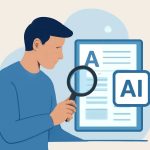
The explosion of generative AI tools has made it possible for anyone to create hyper-realistic images in seconds. From photorealistic portraits that never existed to entirely fabricated news photos, AI-generated visuals are now everywhere. This is where the AI image detector steps in. An AI image detector is a specialized system designed to analyze a picture and estimate whether it was created by a human camera or synthesized by an AI model. Its purpose is simple but critical: help people trust digital visuals again.
Modern AI image detector systems typically rely on machine learning models trained on massive datasets of both real and AI-generated images. By examining subtle patterns in pixels, compression noise, color gradients, and even inconsistencies in lighting or anatomy, these tools attempt to classify an image as real or synthetic. Unlike traditional digital forensics that look for signs of editing or manipulation, AI-focused detectors go one step further, looking for fingerprints of specific generation processes such as diffusion models or GANs.
The importance of this technology goes far beyond simple curiosity. Governments, journalists, educators, and everyday social media users increasingly depend on some way to detect AI image content before they make decisions or share information. In elections, AI-generated campaign photos can sway public opinion. In finance, fake images of disasters can move markets. In personal relationships, fabricated images can be used for harassment or blackmail. Without some form of reliable verification, visual content loses its status as evidence and becomes just another opinion.
Ethically, the necessity of detection tools highlights the tension between creativity and responsibility. Generative image models enable incredible art, design prototypes, and marketing visuals, but they also lower the barrier for large-scale misinformation. An effective AI image detector acts like a counterweight, similar to spam filters for email or antivirus software for files. It doesn’t stop creation, but it flags what might be unsafe, deceptive, or synthetic so humans can investigate further.
From a technical perspective, AI image detection is an arms race. As generators improve, their outputs look more natural, with fewer obvious flaws like distorted hands or blurred backgrounds. In response, detectors must become more sophisticated, leaning on statistical signatures invisible to the human eye. This cat-and-mouse dynamic ensures that the discipline of AI image detection will remain an active and rapidly evolving research field for years to come.
How AI Image Detectors Work: Under the Hood of Synthetic Image Forensics
To understand how systems that detect AI image content actually operate, it helps to break down the process into stages. First, the detector ingests the image in a standardized format, often converting color spaces, resizing, and normalizing pixel values. This preprocessing step ensures that the incoming data matches the conditions under which the detection model was trained, which is crucial for accurate predictions.
Once the image is prepared, it passes through a trained neural network, typically a convolutional neural network (CNN) or a vision transformer (ViT). These architectures excel at analyzing spatial patterns and textures. During training, the model is shown millions of examples of both camera-captured photos and AI-generated images created with various tools and models. The training process adjusts the network’s internal parameters so it can pick up on subtle indicators that distinguish real from synthetic.
These indicators can include artifacts like unnatural noise distributions, repetitive patterns from upscaling, irregular reflections in eyes or glass, or micro-level inconsistencies introduced by diffusion sampling steps. Even when a picture looks flawless to a human, a well-trained AI detector can recognize statistical traces characteristic of generation pipelines. Some advanced detectors can even identify the likely model family used to create the image, such as a particular diffusion model or GAN architecture.
In addition to raw pixel analysis, some detectors combine other signals. They might inspect metadata for suspicious patterns, check for watermarks embedded by certain AI platforms, or cross-reference visual content against known training or reference datasets. Hybrid systems can use ensembles of models that vote or provide confidence scores, increasing reliability when the stakes are high, such as in legal or journalistic contexts.
However, the task is far from trivial. As generative models improve, they reduce many of the obvious flaws early detectors relied on. Some image generators now intentionally try to avoid detectable fingerprints, leading to adversarial examples designed specifically to fool detectors. This creates a constant cycle of improvement on both sides. To remain effective, detection models must frequently update their training data, incorporating new types of AI images and adversarial tricks. The more diverse the training set, the better the chances that a detector can generalize to novel synthetic images it has never seen before.
Finally, interpretation matters. Detectors rarely provide a simple yes-or-no answer. Instead, they output a probability or confidence score that an image is AI-generated. Responsible use involves treating this output as one piece of evidence among many, not absolute proof. In risk-sensitive environments—such as newsrooms, courts, or election-monitoring groups—human experts should combine detection scores with contextual analysis, source verification, and traditional fact-checking to arrive at a reliable conclusion.
Real-World Uses, Limitations, and Case Studies of AI Image Detection
The practical applications of AI image detection span news media, education, e-commerce, social networks, and security. Journalists now routinely run suspicious photos through an AI image detector before publishing. When a viral image appears on social platforms claiming to show a major event—a war scene, political protest, or natural disaster—newsrooms use detectors alongside reverse image search and geolocation techniques to verify authenticity. This extra layer of scrutiny can prevent the spread of fabricated narratives that might inflame tensions or mislead the public.
Educational institutions and researchers use detection tools to study how misinformation spreads and how people react to AI-generated visuals. A psychology lab, for example, might expose participants to a mix of real and synthetic faces, then compare human judgments against the outputs of an AI detector. These studies reveal that people are often overconfident in their ability to spot fakes, which strengthens the argument for automated assistance when stakes are high.
In e-commerce, marketplaces are increasingly wary of product listings that use AI-generated images to misrepresent goods. Sellers may showcase items that look pristine and high-end, yet no such product actually exists. By integrating automated checks powered by tools like ai image detector solutions directly into their content moderation pipelines, platforms can flag or block suspicious listings before customers are deceived. Similar strategies apply to rental listings, job postings, or dating profiles where synthetic photos are used to build false identities.
Despite their growing importance, AI image detectors come with limitations. Accuracy is not perfect, especially as generative models evolve. False positives—labeling a genuine photo as AI-generated—can damage reputations or undermine trust in legitimate reporting. False negatives—failing to flag an AI-generated image—can allow sophisticated disinformation to slip through. Bias is another concern: if a detector’s training data underrepresents certain demographics, it might perform unevenly across different faces or scenes, raising fairness and ethical issues.
Several real-world incidents highlight both the promise and the fragility of detection technology. In one widely reported case, an AI-generated image of an explosion near a major landmark caused temporary stock market volatility when it spread on social media before being debunked. Newsrooms that relied on layered verification, including detection tools, caught the deception faster than the general public. In contrast, smaller outlets that lacked such tools were slower to respond, illustrating how access to reliable detection can directly influence information quality and public reaction.
Social platforms are beginning to label content suspected to be AI-generated, sometimes in cooperation with image detection providers. However, if labels rely solely on automated systems, adversaries may learn how to exploit blind spots. Best practice is to combine detection with other strategies: encouraging creators to disclose AI use, embedding cryptographic provenance data at the moment of capture, and educating users on how to interpret labels and detection scores. In this environment, AI image detectors are not a silver bullet but an essential component of a broader ecosystem aimed at preserving trust in digital imagery.