From Dock to Door: Why a Loading Unloading Conveyor Is the Fastest Way to Move More, Safer
CliffEMoore,
What a Loading Unloading Conveyor Does—and Why It’s Become Essential
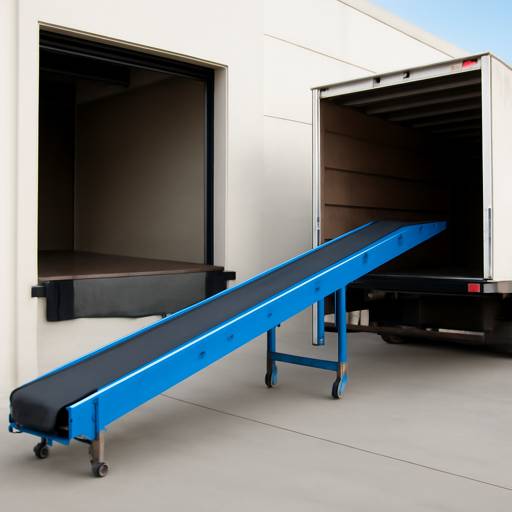
A loading unloading conveyor bridges the gap between trailers, containers, and your in-facility material flow. It extends deep into vans and 40-foot containers, reduces manual carrying, and hands off parcels, totes, sacks, or irregular packages to your sortation or storage workflows. By automating the heaviest, most repetitive tasks at the dock, a modern system can boost receiving and dispatch capacity by double digits while also cutting labor strain and injury risk. In high-velocity environments—express delivery hubs, cross-border logistics gateways, and omnichannel fulfillment centers—this equipment is no longer a nice-to-have; it’s core infrastructure.
There are several configurations, each tuned to different loads and spaces. Telescopic belt models use powered belts across multiple extending stages to move cartons swiftly from trailer to line. Flexible or expandable roller conveyors snake around tight dock layouts and can be quickly reconfigured as demand shifts. Motorized roller (MDR) sections offer zone control for accumulation and gentle handling of fragile goods. For sacks, mailbags, and apparel, a lightweight belt with variable speed can deliver smoother transfer and better control. The right choice depends on package variability, throughput targets, and the choreography of your dock operations.
Beyond speed, ergonomics and safety drive adoption. With height-adjustable booms, anti-pinch guarding, emergency stop circuits, and soft-start drives, the system keeps operators out of high-strain postures and reduces climbing inside trailers. Add-ons like articulating heads, side guides, and LED lighting improve visibility and loading accuracy. Variable frequency drives (VFDs) and intelligent PLC control ensure steady flow and gentle acceleration, minimizing product damage and noise. These design details accumulate into a safer, quieter, and more precise workflow—a critical differentiator in busy urban depots and 24/7 parcel terminals.
Connectivity is another advantage. A well-engineered loading unloading conveyor can sync with upstream scanners, dimensioning systems, and warehouse control software, creating a real-time picture of what’s entering or leaving the building. This data sharpens labor planning and reduces dwell times. For operations scaling across multiple facilities or regions, standardized modules and remote diagnostics simplify maintenance and speed up commissioning. To explore system options and modular combinations that fit different site constraints, see loading unloading conveyor.
How to Choose the Right System: Throughput, Space, Safety, and Total Cost
Selecting the right conveyor starts with defining what “flow” means for your dock. Begin by quantifying average and peak packages per hour, typical trailer mix (parcel vans vs. 53-footers or high-cube containers), and the distribution of package sizes and weights. If 70% of your volume is sub-10 kg parcels, a telescopic belt with a wide, low-friction surface and 25–40 m/min speed may be optimal. If you handle heavier cartons up to 50 kg with frequent stops and starts, consider MDR zones with torque-limited rollers and accumulation logic. For highly irregular loads, flexible gravity or powered rollers can offer the adaptability to snake around columns or share space with forklifts.
Next, evaluate your physical environment. Dock height, trailer sill variation, and interior obstacles affect the choice of articulating nose, lift-assist, or hydraulic height adjustment. Measure aisle widths, door spacing, and turning radii: a telescopic with a rotating base can serve multiple doors; a mobile unit on castors can be parked when not in use; ceiling height limits the number of telescopic stages. Consider interface points—how the boom hands off to your sortation or storage line. The smoother the transition (guided chutes, powered transfers, or accumulation zones), the fewer jams and exceptions your team will manage.
Safety and compliance should be integral, not add-ons. Look for comprehensive guarding, slip-resistant operator platforms, intuitive E-stop placement, emergency pull cords, and status lights. In jurisdictions following CE, UL, or OSHA frameworks, ensure documentation and labeling meet local rules. For long shifts or night operations, prioritize low-noise drives, integrated LED task lighting, and soft starts. If your site runs in extreme temperatures or dusty conditions, specify appropriate IP ratings, sealed bearings, and belt materials resistant to abrasion or static build-up.
Finally, assess total cost of ownership (TCO), not just capital expenditure. Energy-efficient drives, regenerative braking on declines, and sleep modes during idle time can cut utility bills. Modular designs that share spare parts across models reduce inventory and downtime. Remote monitoring and predictive maintenance can flag belt tension, motor temperature, or sensor anomalies before failure, saving weekend call-outs. Factor in operator training and SOPs: standardized interfaces, clear HMIs, and quick-change belts shorten ramp-up and minimize human error. A thoughtful selection balances speed, adaptability, and maintainability, ensuring your loading unloading conveyor delivers ROI through peak season and beyond.
Real-World Scenarios: E‑Commerce Peaks, Cross-Border Logistics, and Industrial Shipping
Consider a regional e-commerce hub facing 3× volume spikes during promotional events. Before automation, crews formed bucket brigades to move cartons from trailers to staging. Fatigue rose after a few hours, mis-sorts increased, and trucks idled at the dock. Implementing an extendable belt conveyor with an articulating nose changed the equation. Operators walked the boom into trailers, adjusted the height to match each stack layer, and maintained a steady pace with variable speed. Because cartons flowed directly into the site’s pre-sort line, fewer touches were needed; dock-to-sort latency shrank from 18 minutes to 6, and overtime fell by 22% over the quarter.
In cross-border logistics, containers vary widely in load quality and dunnage. A mobile telescopic unit with reinforced belt edges and impact idlers at the infeed can handle bulk-packed parcels and irregular sacks without snarls. Coupled with handheld scanners at the boom head, barcodes get read at first touch, tying each item to a location and customs status instantly. The result: faster visibility across international legs and fewer exceptions at the destination depot. For operations spanning ports and inland hubs, identical conveyor modules simplify training and maintenance, enabling teams to redeploy capacity wherever demand surges.
Industrial shipping presents different constraints. A manufacturer loading heavier components—gearboxes, small appliances, or automotive parts—needs controlled movement and accumulation. MDR-driven zones with photo-eyes allow cartons to queue without contact, preventing scuffs and crush damage. Integrated weigh-in-motion and dimensioning at the conveyor handoff supports freight auditing and right-size packaging. When paired with a quality dock lift or scissor table, operators can maintain ergonomic pick-and-place heights, cutting strain and improving pack density inside trailers. Over six months, one plant reduced handling damage by 31% and improved pallet cube utilization thanks to consistent feed and better stacking patterns.
Returns processing provides another angle. Reversing conveyor direction and using bidirectional controls turns the same equipment into a recovery line. As items come off vehicles, associates triage them into totes on an adjacent spur or divert bad barcodes to a quality station. Because the conveyor sets the pace, supervisors can load balance across multiple doors in real time, nudging speed up or down and reassigning staff without chaos. The shared thread across these examples is focus: when the dock flow is smooth and predictable, upstream tasks—scanning, sorting, packing, and dispatch—get easier. With smart layout, modular hardware, and disciplined SOPs, a loading unloading conveyor becomes the quiet engine that keeps parcels and products moving, even when volume surges unexpectedly.