about : Stay compliant with the industry's leading SDK & API for age verification. Our plug-and-play system automatically verifies user age for visitors in regions with mandatory age checks — minimal friction, no complexity.
How an age verification system works: technology, security, and privacy
An effective age verification solution blends several technologies to deliver rapid, reliable decisions while protecting user privacy. At the core sits a robust SDK & API that integrates with web and mobile applications to collect only the data necessary to determine eligibility. Typical methods include document scanning, face match biometrics, database checks, and risk-based heuristics that weight multiple signals. Document scanning reads and parses government-issued IDs with optical character recognition (OCR) and validates document authenticity using image forensics. Face match compares biometric landmarks between a live selfie and the ID photo to confirm that the visitor is the document holder.
Security and privacy are foundational. Modern systems apply end-to-end encryption during data transit and store sensitive elements using tokenization or not at all, keeping Personally Identifiable Information (PII) off the primary application servers. Compliance with regional privacy laws, such as GDPR and CCPA, requires clear retention policies, consent flows, and the ability to erase data on demand. Systems often support pseudonymized identifiers, minimal data collection modes, and configurable retention windows to align with legal and business requirements.
Accuracy is boosted by continuous model updates and anti-spoofing measures: liveness detection, challenge-response selfie prompts, and validation against authoritative databases where permitted. Latency is optimized by offloading heavy processing to the cloud while maintaining asynchronous flows for mobile apps to avoid blocking the user experience. Together, these technical choices create a balance between robust verification, regulatory compliance, and low-friction interactions that help businesses maintain trust without sacrificing conversion.
Implementation and user experience: reducing friction while staying compliant
Implementing an age verification capability requires a careful blend of compliance logic and UX design. The goal is to minimize abandonment while ensuring regulatory checks are met. A layered approach often works best: show a simple self-assertion gate for low-risk interactions, escalate to document or biometric checks only when required by policy or when risk heuristics indicate suspicion. This risk-based approach reduces unnecessary friction for the majority of users while preserving rigorous checks for high-risk flows.
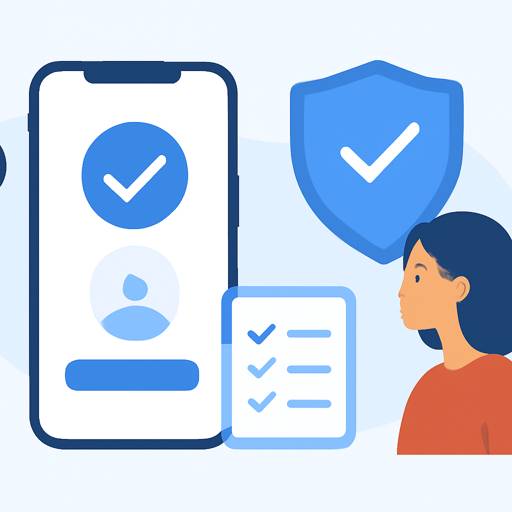
UX considerations include clear messaging about why verification is required, transparent data handling explanations, and visible security cues that reassure users. Progressive disclosure—asking for more information only when needed—keeps the initial interaction light. For mobile, optimize camera permissions and provide clear instructions for capturing ID and selfies, with real-time feedback on image quality to reduce repeated attempts. Accessibility is crucial: provide alternative flows for users who cannot complete biometric checks, such as voice-based verification or manual review options, and ensure forms are screen-reader friendly.
Operationally, integration via a plug-and-play SDK & API accelerates time-to-value. Developers can call verification endpoints, receive standardized responses, and handle edge cases like retries and manual reviews through an administrative dashboard. Configurable workflows let compliance teams enforce region-specific rules—age thresholds, acceptable ID types, and retention policies—without code changes. Monitoring and analytics then feed back into optimization loops, revealing where users drop off and enabling targeted improvements that balance conversion with compliance.
Real-world examples and industry use cases demonstrating impact
Across industries, organizations adopt an age verification framework to meet legal obligations and protect brand integrity. In e-commerce, retailers selling age-restricted products—alcohol, tobacco, or age-limited media—reduce chargebacks and legal risk by verifying buyers at checkout. One common pattern is to defer strict verification until purchase confirmation, offering a lightweight gate earlier and requesting ID only at the point of sale or delivery. This minimizes cart abandonment while ensuring compliance before fulfillment.
Gaming and social platforms use age verification to enforce age-restricted content boundaries and comply with youth protection laws. Platforms combine self-declaration with automated checks for suspicious accounts and manual review workflows for flagged users. For regulated sectors like online gambling, operators implement continuous verification to detect account sharing and underage access, pairing verification with transaction monitoring to spot anomalies.
Case studies show measurable benefits: reduced regulatory fines, improved conversion compared with heavy-handed pop-ups, and faster manual review turnaround when automated triage filters out low-risk cases. Businesses leveraging a unified age verification system report smoother audits due to centralized logs and configurable retention settings. By tailoring verification levels to user risk and regional requirements, these organizations maintain a delicate balance between compliance, privacy, and user experience while scaling operations across multiple jurisdictions.